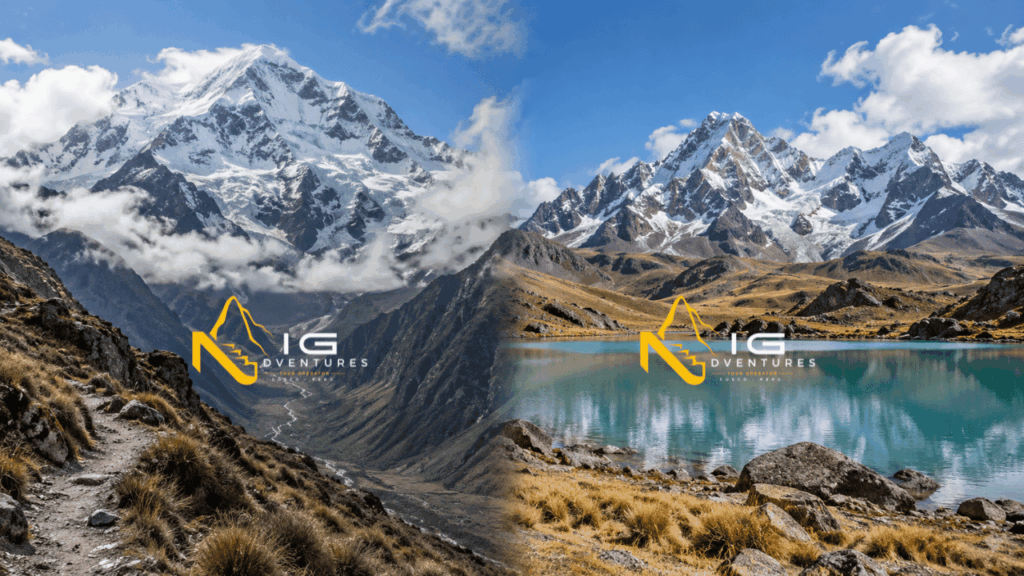
The Salkantay Trek and the Ausangate Trek are two of the most spectacular high-altitude adventures in the Cusco region. Both routes offer snow-covered mountains, turquoise lakes, remote valleys and opportunities to experience the traditional culture of the Peruvian Andes. However, they are designed for different types of travelers.
The Salkantay Trek is primarily chosen as an alternative route to Machu Picchu. The Ausangate Trek is a remote circuit around one of Peru’s most sacred mountains and does not normally include Machu Picchu.
In this Salkantay Trek vs. Ausangate Trek comparison, you will discover their differences in altitude, difficulty, landscapes, duration, accommodation and cultural experiences.
What Is the Salkantay Trek?
The Salkantay Trek is a multi-day hiking route that passes near Salkantay Mountain and continues through different ecosystems toward Machu Picchu.
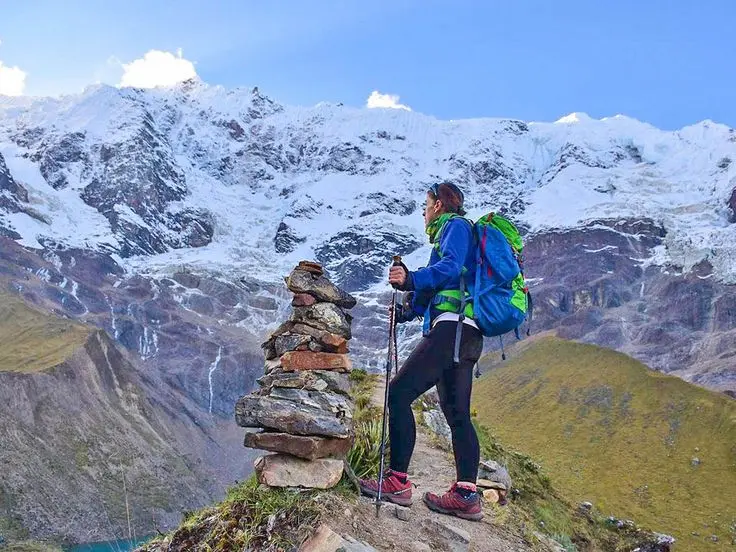
Salkantay Mountain rises to more than 6,200 meters above sea level and is considered one of the most important sacred mountains—or apus—in the region. Peru’s official tourism portal describes a classic Salkantay experience lasting approximately five days and four nights. Peru Travel: Mount Salkantay
The standard trek usually crosses Salkantay Pass at approximately 4,600 meters before descending from the high Andes into cloud forest and warmer subtropical valleys.
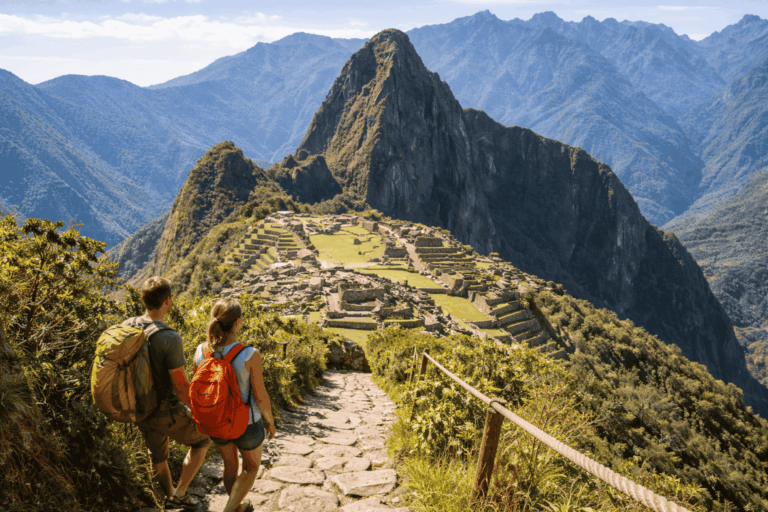
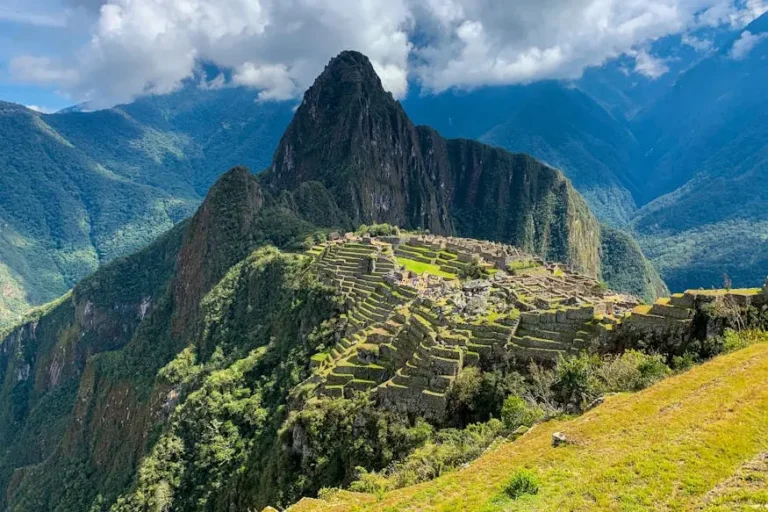
The route generally finishes in Machu Picchu Pueblo. Travelers then visit Machu Picchu using the circuit and entry time indicated on their separate entrance ticket.
What Is the Ausangate Trek?
The Ausangate Trek is a high-altitude circuit around Ausangate Mountain, located in the Vilcanota mountain range southeast of Cusco.
Ausangate reaches approximately 6,384 meters above sea level, although Peru’s official tourism website lists the tourist attraction at 6,193 meters. Regardless of the published measurement used, it is one of the highest and most important mountains in southern Peru. Peru Travel: Mount Ausangate
The traditional Ausangate circuit normally lasts between five and seven days. It crosses remote valleys, high mountain passes, glacial lakes and territories used by alpaca- and llama-herding communities.
Unlike Salkantay, the Ausangate Trek does not naturally end at Machu Picchu. It is a destination in its own right and is recommended for hikers seeking a remote, demanding and culturally meaningful expedition.
Salkantay Trek vs. Ausangate Trek: Main Differences
| Feature | Salkantay Trek | Ausangate Trek |
|---|---|---|
| Standard duration | 4 or 5 days | 5 to 7 days |
| Main objective | Trekking route toward Machu Picchu | High-altitude circuit around Ausangate |
| Highest common point | Salkantay Pass, about 4,600 m | Passes often above 5,000 m |
| Difficulty | Challenging | Very challenging |
| Machu Picchu included | Usually included at the end | Not normally included |
| Landscapes | Glaciers, valleys and cloud forest | Glaciers, lakes and high-altitude grasslands |
| Ecological variety | Very high | Primarily high-Andean terrain |
| Cultural contact | Moderate | Stronger interaction with pastoral communities |
| Accommodation | Camps, domes, cabins or lodges | Mainly remote campsites; some lodge options |
| Number of hikers | Popular | Lower |
| Isolation | Moderate | High |
| Best suited to | First major trek to Machu Picchu | Experienced high-altitude hikers |
Which Trek Is More Difficult?
Salkantay Trek difficulty
The Salkantay Trek is challenging because it includes long hiking days, steep slopes and a high mountain pass. However, most itineraries descend into lower and warmer areas after crossing Salkantay Pass.
Its main challenges include:
- Reaching approximately 4,600 meters above sea level.
- Rapid changes in temperature.
- Long ascents and descents.
- Cold conditions near the pass.
- Several consecutive days of walking.
- Possible rain and mud in the cloud forest.
Travelers with reasonable fitness, adequate acclimatization and proper preparation can often complete it successfully.
Ausangate Trek difficulty
The Ausangate Trek is usually more demanding. Much of the route remains at elevations above 4,000 meters, and some itineraries cross several passes located at or above 5,000 meters.
Its primary challenges include:
- Prolonged exposure to high altitude.
- Multiple demanding mountain passes.
- Very cold nights.
- Remote campsites.
- Limited opportunities to leave the route.
- Rapidly changing weather.
- Fewer tourist services.
Verdict: The Ausangate Trek is generally more difficult because hikers remain at higher elevations for longer and cross several major passes.
Which Trek Has Better Landscapes?
Both routes offer extraordinary scenery, but their environments are different.
Landscapes on the Salkantay Trek
Salkantay is known for its ecological diversity. Depending on the itinerary, hikers may see:
- Salkantay and Humantay mountains
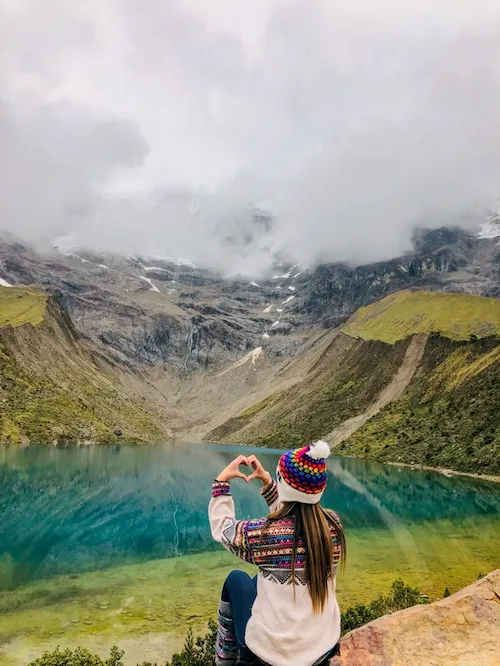
- Humantay Lake
- Glacial valleys
- High-altitude grasslands
- Cloud forest
- Rivers and waterfalls
- Coffee and tropical fruit plantations
- Subtropical vegetation
The dramatic transition from glaciers to cloud forest is one of the route’s greatest attractions.
Landscapes on the Ausangate Trek
Ausangate offers a more consistently high-altitude environment. Its scenery may include:
- Ausangate’s glaciers
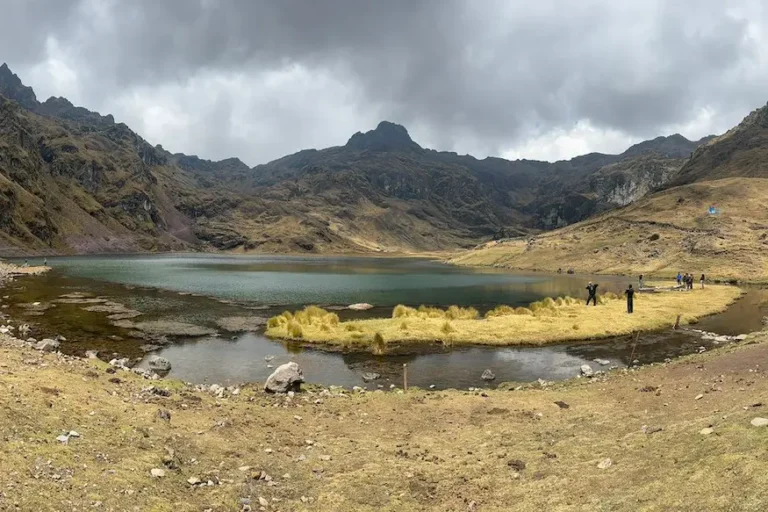
- Turquoise, blue and reddish lagoons
- Broad puna landscapes
- Herds of alpacas and llamas
- Remote Andean communities
- Natural hot springs
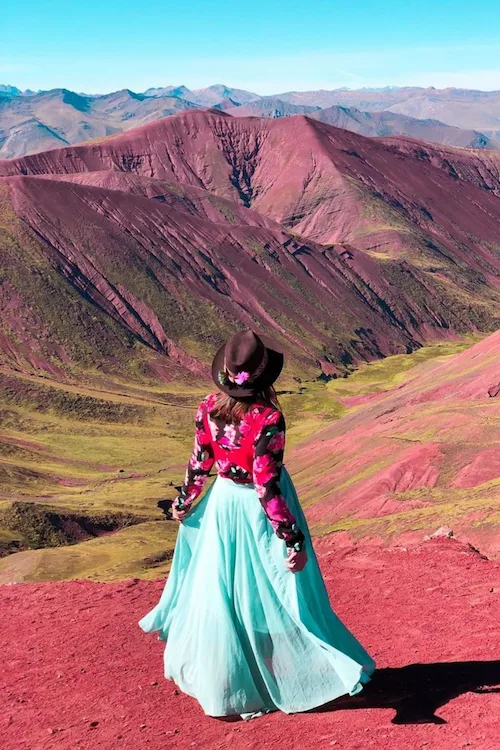
- Colorful mineral formations
- Views of Rainbow Mountain on certain itineraries
Some Ausangate experiences reach elevations of approximately 5,150 meters. Peru’s official tourism portal recommends April through October for a five-day high-altitude lodge itinerary in the area. Peru Travel: Andean Lodges
Verdict: Choose Salkantay for diverse ecosystems. Choose Ausangate for remote glacial scenery and dramatic high-Andean landscapes.
Which Route Is Better for Visiting Machu Picchu?
The Salkantay Trek is the clear choice if Machu Picchu is one of your main travel goals.
Most Salkantay itineraries lead toward Machu Picchu Pueblo, where hikers spend the final night before visiting the archaeological site. The exact entrance circuit depends on the ticket purchased in advance.
The Ausangate Trek is located in a different area of the Cusco region and does not end at Machu Picchu. Combining Ausangate and Machu Picchu is possible, but it requires additional transportation, entrance tickets and travel days.
Verdict: Select Salkantay if you want to combine trekking with Machu Picchu. Select Ausangate if the mountain expedition itself is your principal objective.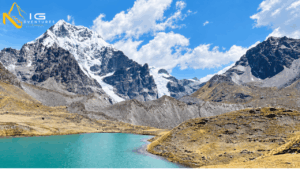
Which Trek Offers a Better Cultural Experience?
The Salkantay route passes through rural settlements and agricultural areas, especially as it descends toward the cloud forest. Travelers can observe how the landscape, crops and local lifestyles change with the altitude.
However, the Ausangate region generally provides a deeper connection with traditional high-Andean pastoral culture. Local families raise alpacas and llamas, speak Quechua and maintain customs closely connected to the mountains and the Pachamama, or Mother Earth.
Ausangate is regarded as a powerful apu and plays an important spiritual role in the regional Andean worldview. The wider area is also associated with the annual pilgrimage to the Sanctuary of the Lord of Qoyllur Rit’i.
Travelers should approach communities respectfully, ask permission before photographing people and follow the guidance of local guides.
Verdict: Ausangate usually offers the stronger high-Andean cultural experience.
Altitude Comparison
Altitude is one of the most important factors when deciding between these treks.
| Altitude factor | Salkantay Trek | Ausangate Trek |
|---|---|---|
| Highest common trekking point | Approximately 4,600 m | Commonly above 5,000 m |
| Time spent above 4,000 m | Relatively limited | Several days |
| Altitude difficulty | High | Very high |
| Recommended acclimatization | At least 2–3 days | At least 3 days, preferably more |
The Salkantay Trek reaches a considerable altitude, but hikers soon descend into lower valleys. On Ausangate, the body must cope with high elevation for a longer period.
Good physical condition does not guarantee protection from altitude sickness. Anyone can be affected, so proper acclimatization is essential.
How Many Days Do You Need?
Salkantay Trek duration
The most common options are:
- Four days: Faster and more physically intense.
- Five days: The classic and better-balanced option.
- Six or more days: May include additional attractions or a slower pace.
The five-day itinerary is often the most suitable because it provides a more progressive journey and enough time to reach Machu Picchu.
Ausangate Trek duration
Common alternatives include:
- Four days: Shortened and physically demanding route.
- Five days: A standard condensed circuit.
- Six or seven days: More complete and better paced.
- One-day hikes: Visits to specific attractions such as the Seven Lakes, rather than completing the entire circuit.
Peru’s official tourism portal describes the Seven Lakes of Ausangate as one of the most spectacular shorter hiking alternatives in the area. Peru Travel: Best hikes in Cusco
Accommodation and Services
Accommodation on Salkantay
The Salkantay route has a more developed tourism infrastructure. Depending on the program, accommodation may include:
- Tents
- Mountain domes
- Cabins
- Basic lodges
- Hotels in Machu Picchu Pueblo
Some camps provide showers, electricity or charging points, although these services vary considerably.
Accommodation on Ausangate
The traditional Ausangate circuit is more remote and normally uses campsites. Some communities and specialized programs provide lodges or rustic accommodation, but services are generally more limited.
Hikers should be prepared for cold nights, basic facilities and limited connectivity.
Verdict: Salkantay normally offers greater variety and comfort. Ausangate provides a more isolated expedition-style experience.
Which Trek Has Fewer Tourists?
The Salkantay Trek is one of the most popular alternatives to the Inca Trail. During the busiest months, several groups may use the same paths and campsites.
Ausangate normally receives fewer multi-day hikers. Its altitude, difficulty and remote location naturally reduce the number of visitors.
However, sectors associated with Rainbow Mountain or the Seven Lakes may be busier because they also receive day visitors.
Verdict: For solitude and remote trekking, the complete Ausangate circuit is usually the better option.
Do These Treks Require Permits?
Neither route uses the same restricted permit system as the Classic Inca Trail. This generally makes both treks more flexible.
Nevertheless, travelers may need to pay community or local entrance fees along certain sectors. These payments and access arrangements may change, so they should be confirmed before departure.
For the Salkantay Trek, the entrance ticket to Machu Picchu must be reserved separately. Availability on the trekking route does not guarantee availability for Machu Picchu.
Best Time to Hike Salkantay and Ausangate
The period from April to October generally offers drier and more stable trekking conditions. This is also the period recommended by Peru’s official tourism platform for high-altitude experiences around Ausangate. Peru Travel: Andean Lodges
June, July and August often have clearer skies, but temperatures can fall sharply at night, particularly around Ausangate.
The rainier period usually occurs between November and March. During these months, hikers may experience:
- Heavy rainfall
- Snow at high passes
- Muddy trails
- Reduced visibility
- Higher river levels
- Possible itinerary changes
Salkantay may experience more rainfall in the cloud forest, while Ausangate may have severe cold, snow or hail at high elevation.
Which Trek Is More Expensive?
Costs depend on the route, group size, accommodation and services included.
Salkantay packages often include transportation, guides, meals, camping equipment, horses for shared gear, accommodation in Machu Picchu Pueblo and return transportation. Machu Picchu and train tickets may or may not be included.
Ausangate requires specialized high-altitude logistics, including remote transportation, camping equipment, cooks, horses and experienced local staff. Even without Machu Picchu expenses, a well-organized private Ausangate trek may cost more than expected.
Before booking, verify whether the price includes:
- Entrance fees
- Machu Picchu ticket, if applicable
- Train tickets
- Transportation
- Professional guide
- Cook and meals
- Camping equipment
- Sleeping bag
- Horses for equipment
- Emergency oxygen
- First-aid equipment
- Hotel accommodation
- Return transportation to Cusco
Choose the Salkantay Trek If:
- You want to finish your trek at Machu Picchu.
- This is your first demanding multi-day hike in Peru.
- You enjoy changing landscapes and ecosystems.
- You prefer more accommodation options.
- You want greater flexibility than the Inca Trail.
- You have four or five days available.
- You are comfortable hiking up to approximately 4,600 meters.
Choose the Ausangate Trek If:
- You already have high-altitude trekking experience.
- You want a remote and less crowded expedition.
- You prefer glaciers, lagoons and puna landscapes.
- You want closer contact with traditional Andean communities.
- You do not need the trek to finish at Machu Picchu.
- You can tolerate several days above 4,000 meters.
- You are prepared for cold and basic campsites.
Can Beginners Complete These Treks?
A well-prepared beginner may complete the Salkantay Trek with proper acclimatization and professional guidance. Training should include long walks, uphill hiking and cardiovascular exercise.
Ausangate is not usually recommended as a first high-altitude trek. The combination of remote terrain, prolonged elevation and multiple mountain passes requires greater experience and preparation.
Travelers should honestly evaluate their health, hiking background and ability to cope with cold before choosing Ausangate.
Essential Packing List
For either route, bring:
- Broken-in waterproof trekking boots
- Thermal base layers
- Insulated jacket
- Waterproof jacket and pants
- Warm hat and gloves
- Sun hat
- Sunglasses with UV protection
- High-SPF sunscreen
- Reusable water bottle
- Headlamp
- Trekking poles
- Personal medication
- Small first-aid kit
- Portable charger
- Rain cover or dry bags
- Passport and cash in Peruvian soles
For Ausangate, additional thermal protection and a sleeping bag suitable for freezing temperatures are especially important.
Frequently Asked Questions
Is Ausangate harder than Salkantay?
Yes, in most cases. Ausangate remains at high elevation for longer and commonly crosses several passes above 5,000 meters. Salkantay reaches a major pass but then descends into lower valleys.
Does the Ausangate Trek include Machu Picchu?
No. The standard Ausangate circuit does not include Machu Picchu. It can be combined with a separate Machu Picchu tour before or after the trek.
Does the Salkantay Trek include Rainbow Mountain?
Not normally. Salkantay and Rainbow Mountain are in different areas. Rainbow Mountain is more commonly combined with an Ausangate itinerary.
Can I hike Salkantay or Ausangate independently?
Independent hiking may be possible, but professional support is strongly recommended. Weather, altitude, limited signage, remote terrain and emergency response make these routes more complex than ordinary day hikes.
Which trek is better for photography?
Salkantay is excellent for photographing ecological transitions and the journey to Machu Picchu. Ausangate is particularly impressive for glaciers, colorful lagoons, alpaca herds and remote high-altitude landscapes.
How long should I acclimatize?
Allow at least two or three days before Salkantay. For Ausangate, three or more acclimatization days are preferable, ideally including a progressive hike at altitude.